History
OUR LEGACY
The Chronicles of the Yoruba Nation
From the spiritual dawn at Ile-Ife, through centuries of kingdoms, empire, resistance, regional governance, and renewed national consciousness, the Yoruba story remains one of dignity, civilization, and enduring identity.
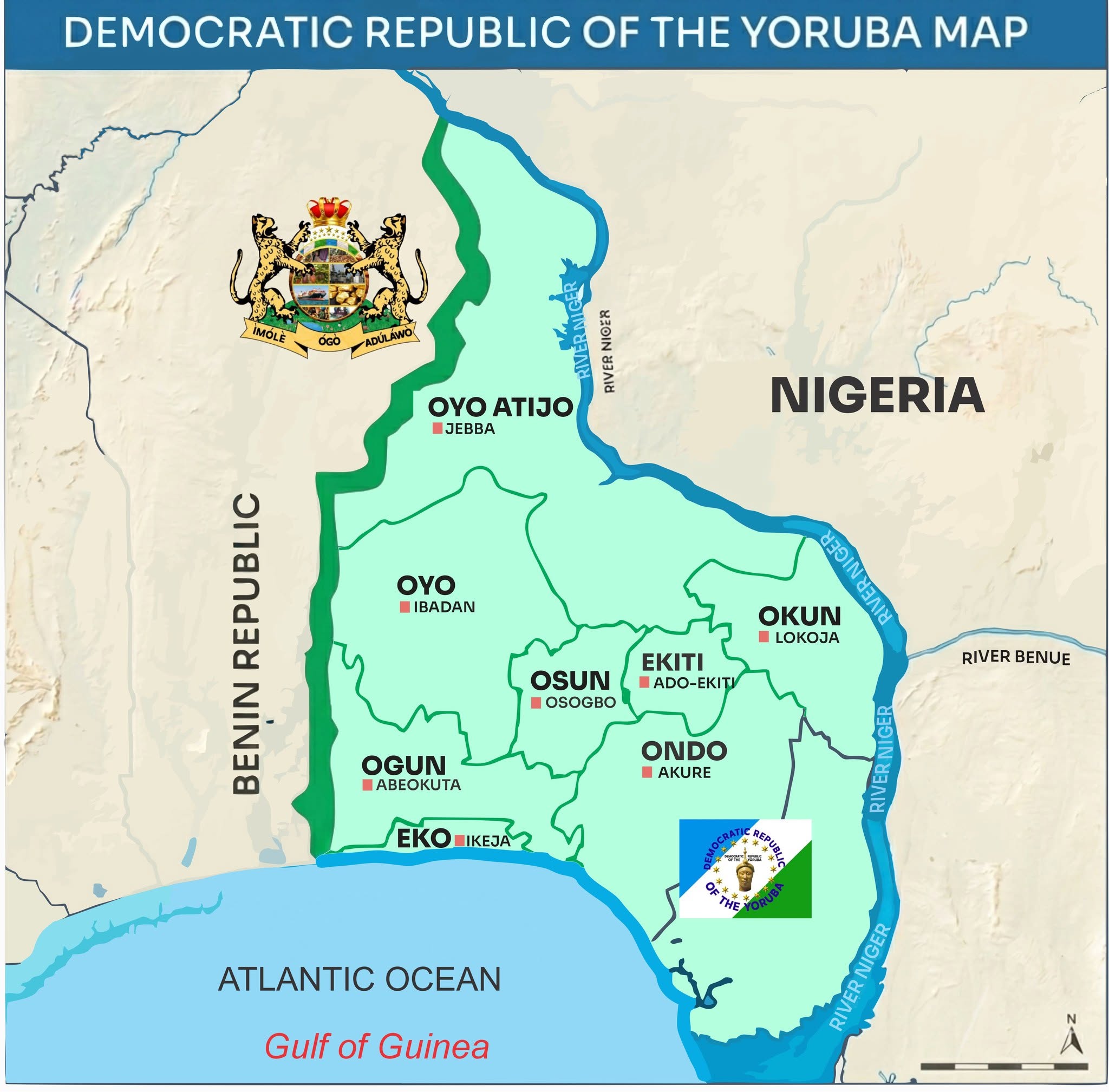
Administrative States of the Republic
The Foundation of the Republic
November 5 Declaration of National Identity
A defining spiritual and cultural affirmation of Yoruba identity, unity, and collective destiny.
Read the Mandate →
Democratic Ideals
Building a nation founded upon justice, democratic governance, accountability, institutional excellence, and cultural continuity.
Justice
Rule of Law
Heritage
Cultural Continuity
Service
Responsible Governance
Official Gazette
Official declarations, constitutional frameworks, national archives, and administrative records of the Democratic Republic of the Yoruba.
View National Archives
Global Yoruba Union
Strengthening cultural, economic, and civic engagement among Indigenous Yoruba People across the world.
PORTAL / IDENTITY / HISTORY
The Yoruba Historical Chronicle
A chronological record of the civilization, institutions, resistance, governance, and national consciousness that shaped the Democratic Republic of the Yoruba.
01
C. 500 BC - 1000 AD
The Dawn of Ile-Ife
Ile-Ife is not simply a city. In Yoruba sacred knowledge, it is remembered as the spiritual source of creation, kingship, civilization, and ancestral identity.
Every Yoruba royal institution draws meaning from this sacred origin. Archaeology, bronze and terracotta artistry, urban settlement, spiritual systems, and the Ifa corpus all affirm Ile-Ife as a foundational centre of Yoruba civilization.
The Ooni Hierarchy
Royal authority rooted in sacred tradition and ancestral continuity.
The Ifa Corpus
A philosophical and divinatory system of extraordinary depth.
Urban Planning
Ancient civic life, settlement order, and social organization.
Bronze and Terracotta
Artistic mastery among the finest in world history.

Historical Record
Artistic and cultural evidence from ancient Ile-Ife civilization.
02
11th Century - 14th Century
The Rise of Yoruba Kingdoms
Between the sacred foundation of Ile-Ife and the rise of the Oyo Empire, Yoruba civilization expanded through powerful city-states, royal lineages, trade routes, spiritual institutions, and regional centres of authority.
Kingdoms such as Ijebu, Ondo, Ekiti, Ijesa, Egba, Owo, Akure, and others developed distinct political traditions while remaining tied to the wider Yoruba civilizational identity.
City-State Growth
Expansion of organized Yoruba towns, kingdoms, and civic structures.
Royal Lineages
Authority shaped by sacred ancestry, palace systems, and councils.
Trade Networks
Commerce across forest, savannah, riverine, and coastal communities.
Cultural Unity
Shared language, spirituality, festivals, arts, and identity.
03

Historical Record
Map record of the political and regional influence of the Oyo Empire.
14th Century - 18th Century
Rise of the Oyo Empire
From the savannahs north of Ile-Ife arose one of the most powerful empires in West African history. The Oyo Empire built military strength, administrative sophistication, and commercial reach.
Through the Alaafin, the Oyo Mesi, the Aare Ona Kakanfo, and a complex political order, Oyo became a symbol of Yoruba statecraft, discipline, and regional influence.
Advanced Cavalry
Strategic military strength across West Africa.
The Oyo Mesi
A constitutional structure of checks and balance.
Regional Commerce
Influence across major trade routes and political centres.
Cultural Reach
Yoruba language, governance, religion, and art spread widely.
04
19th Century - 1960
Resistance and Colonial Occupation
The decline of the Oyo Empire and the rise of colonial pressure opened a difficult period of conflict, reorganization, and foreign administrative control. Yet Yoruba society remained intellectually, commercially, and culturally resilient.
Through education, faith institutions, press activity, commerce, diplomacy, and early political leadership, Yoruba communities preserved their identity and contributed greatly to anti-colonial consciousness.
Colonial Pressure
Foreign administration reshaped regional governance and institutions.
Cultural Resilience
Language, religion, arts, and civic life survived occupation.
Intellectual Leadership
Yoruba educators, lawyers, writers, clergy, and political leaders shaped public life.
Regional Identity
Communities retained traditional institutions and indigenous authority.
05
1950s - 1980s
The Era of Regional Governance and Western Region Development
The Western Region became a landmark era in Yoruba political and social development. It demonstrated the capacity of Yoruba leadership to build institutions, expand education, promote infrastructure, and pursue public welfare.
This period remains central to modern Yoruba political memory because it showed how regional self-administration, disciplined planning, and visionary governance could transform society.
Education Expansion
Major investment in literacy, schooling, and human development.
Public Institutions
Growth of regional administration, public service, and civic planning.
Economic Planning
Agriculture, industry, infrastructure, media, and regional investment.
Governance Memory
A reference point for responsible and people-centred administration.
06
2013 - Present
The Constitutional Question and the Birth of the Republic
In the modern era, questions of constitutional identity, indigenous rights, regional self-determination, and responsible governance became central to the Yoruba national conversation.
The Democratic Republic of the Yoruba represents a peaceful expression of Yoruba identity, civic organization, and the aspiration for a future built on dignity, cultural continuity, institutional development, and public accountability.
National Identity
The public affirmation of Yoruba peoplehood and historical continuity.
20 November 2022
The Democratic Republic of the Yoruba is formally declared.
12 April 2024
Provisional government and public institutional direction are advanced.
The D.R.Y.
A peaceful national project committed to dignity, identity, and governance.

PROVISIONAL PRESIDENCY
His Excellency Prof. Mobolaji Olawale Akinola Omokore
His Excellency Prof. Mobolaji Olawale Akinola Omokore serves as the Provisional President and Head of the Provisional Government of the Democratic Republic of the Yoruba.
Under his leadership, the Republic continues to advance national development, responsible governance, institutional building, cultural preservation, and peaceful civic progress for Indigenous Yoruba People worldwide.
Join the Sovereign Future
Every citizen plays a role in the history being written today. Access national registration, official resources, and public information through the Republic’s civic platforms.