

Building the Future of the Yoruba Nation
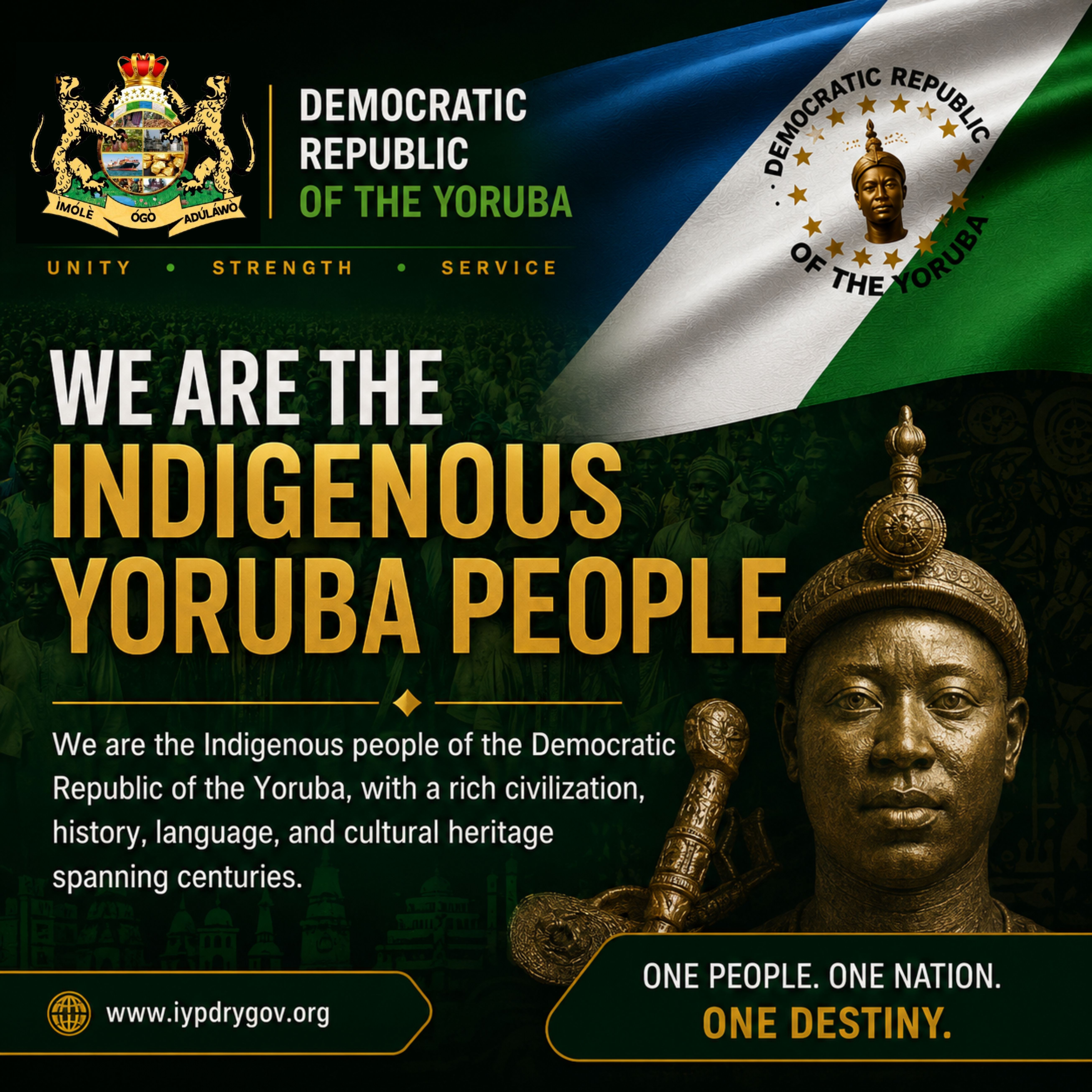
The Democratic Republic of the Yoruba (D.R.Y.) is the country of the Indigenous Yoruba People — founded on shared ancestry, culture, identity, peace, prosperity, and destiny.
Democratic Republic of the Yoruba
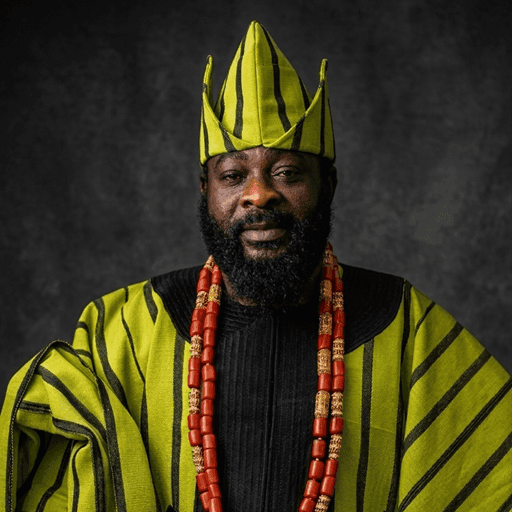
The Democratic Republic of the Yoruba (D.R.Y.) is the country of the Indigenous Yoruba People, founded on shared ancestry, language, culture, heritage, and destiny. Rooted in one of Africa’s oldest civilizations, D.R.Y. exists to secure a peaceful, prosperous, and self-governed future for Yoruba people at home and across the world. Under the leadership of His Excellency Mobolaji Olawale Akinola Omokore, Provisional President and Head of the Provisional Government, the Republic is committed to peace, justice, security, democratic governance, cultural preservation, and national development.
Why Democratic Republic of the Yoruba?
The Democratic Republic of the Yoruba exists to protect the identity, dignity, security, and future of the Yoruba people.
For generations, Yoruba people have been known for education, commerce, innovation, culture, leadership, and strong community values. D.R.Y. builds on this foundation to create a country rooted in justice, accountability, prosperity, and self-governance.
The goal is simple:
to build a safe, peaceful, prosperous, and well-governed homeland for Yoruba people everywhere.
The future of the Yoruba people must be shaped by Yoruba values, Yoruba leadership, and Yoruba vision.
The Declaration of April 12, 2024
April 12, 2024 stands as a defining moment in the history of the Indigenous Yoruba People — a day that marked the public declaration of our sovereign identity and national aspiration.
On this historic day, the Democratic Republic of the Yoruba (D.R.Y.) publicly affirmed its sovereign identity, national aspiration, and commitment to peace, justice, dignity, and self-governance.
Guided by the vision and leadership of His Excellency Mobolaji Olawale Akinola Omokore, Provisional President and Head of the Provisional Government, the Republic continues to pursue a future rooted in democratic values, responsible governance, cultural preservation, and national development.
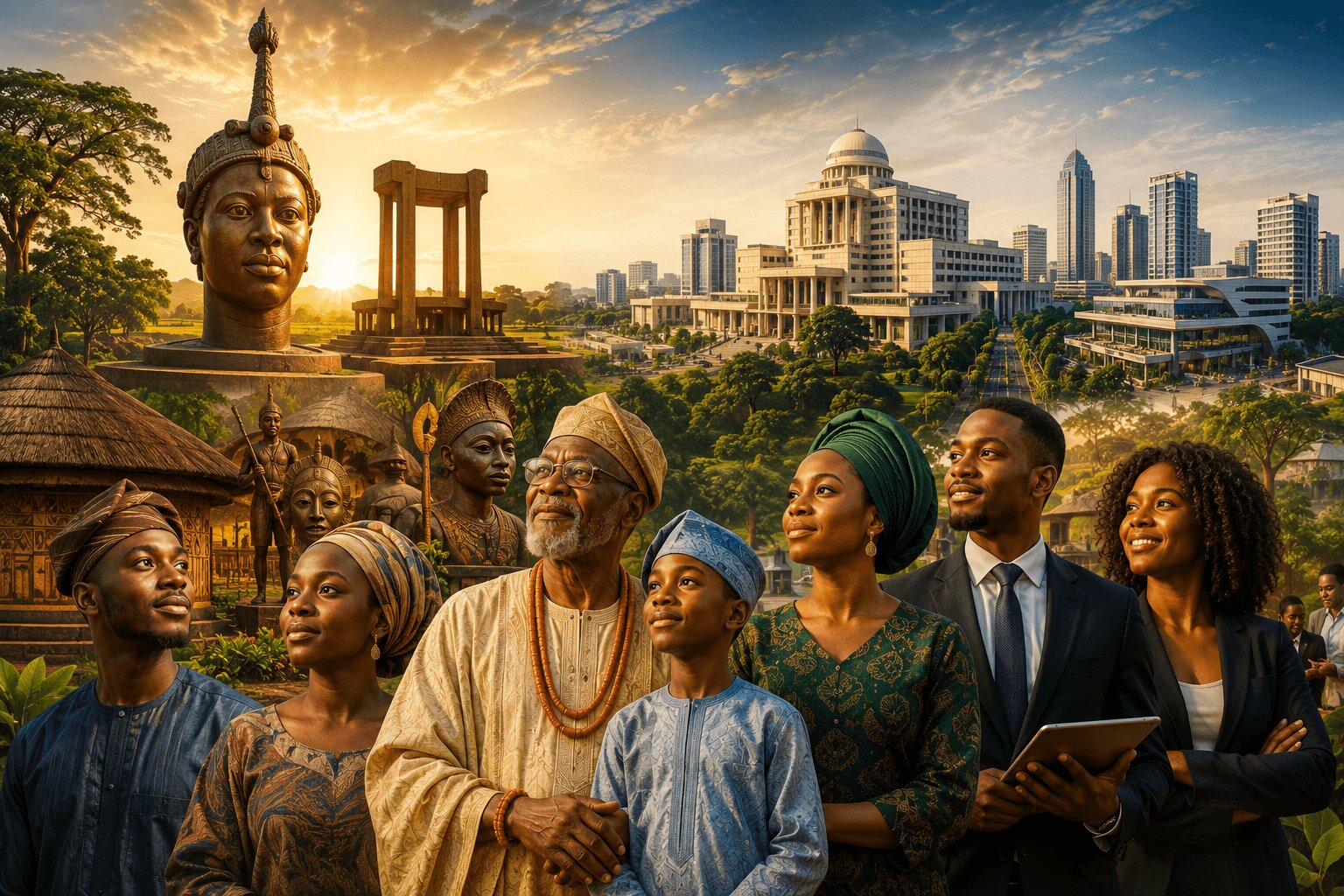
The Democratic Republic of the Yoruba represents a renewal of identity — grounded in the enduring wisdom, values, heritage, and civilization of our ancestors while building a peaceful, prosperous, and secure future for generations yet unborn.
One People. One Voice. One Destiny.
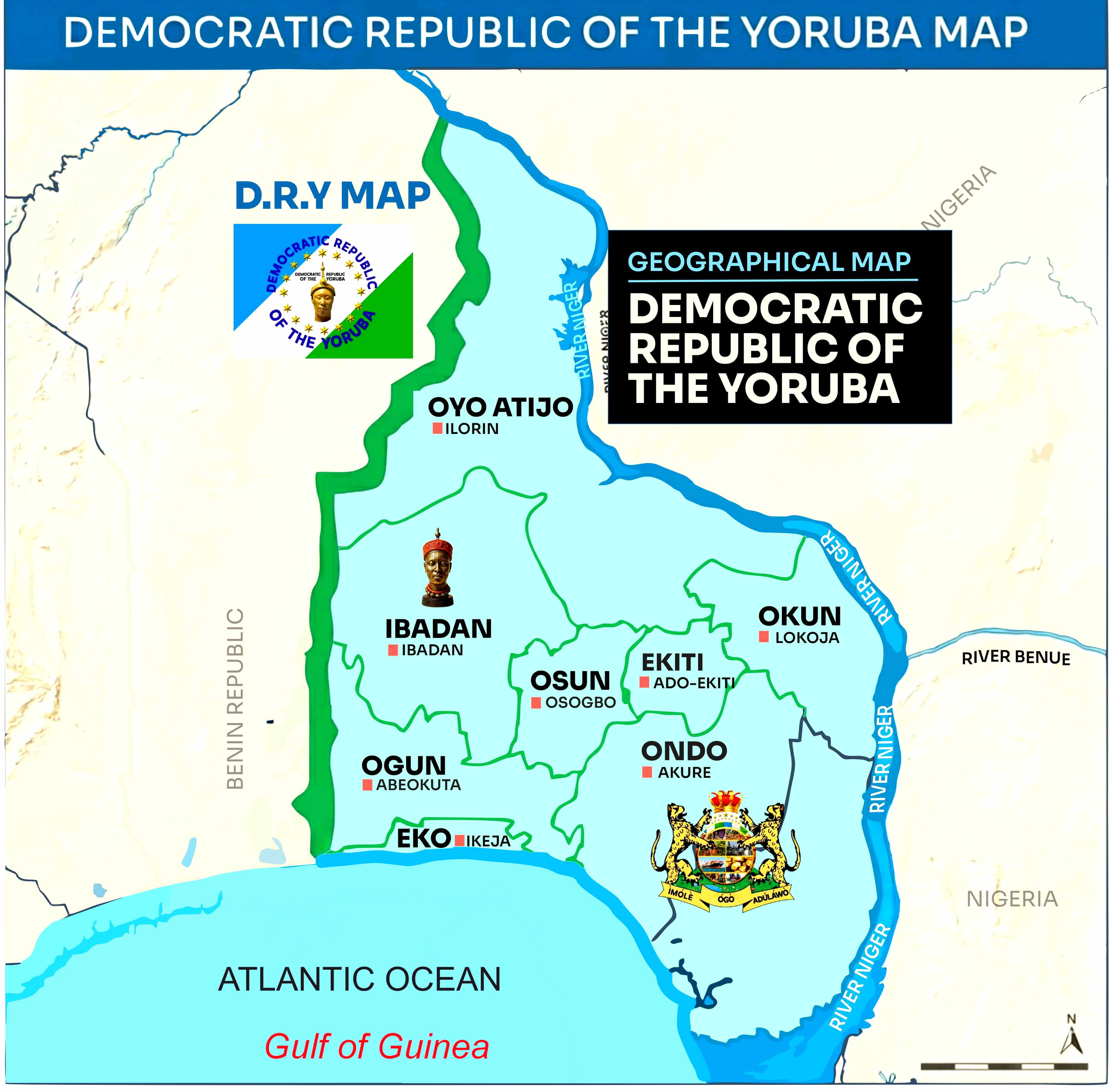
8 States
One Nation. Shared Destiny.
70 Million+
Indigenous Yoruba People
5,000+ Years
Ancient Yoruba Civilization
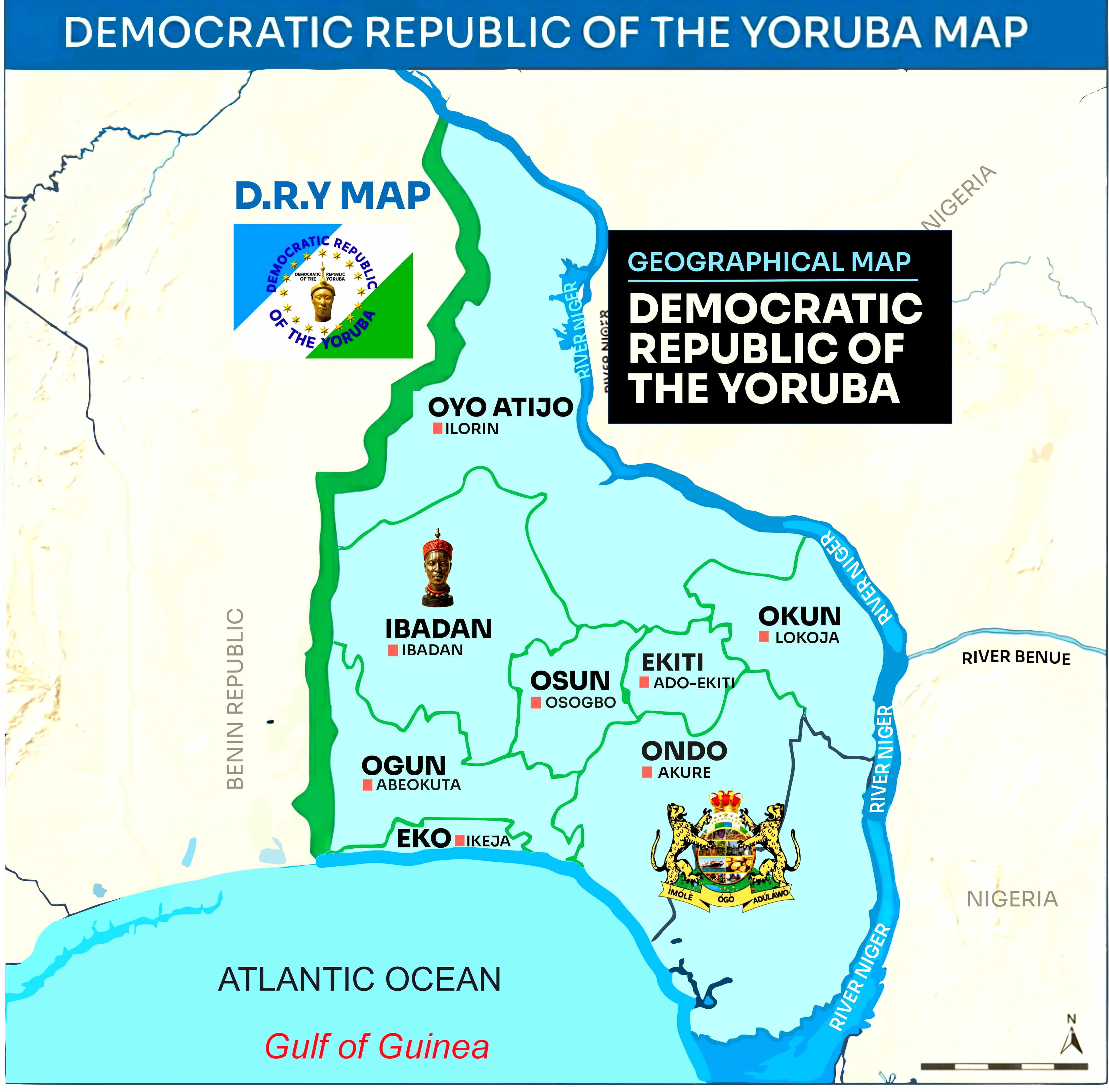
States of the Democratic Republic of the Yoruba
Eight states. One nation. Each carries its own history, its own character, and its own contribution to the life of the Republic. Together, they are what the Democratic Republic of the Yoruba is made of.
OYO
Capital: Ibadan
The cradle of civilization, rooted in the old Oyo Empire and known for agriculture, commerce, education, and culture.
OGUN
Capital: Abeokuta
The gateway to commerce, blending deep Yoruba heritage with strong industry, manufacturing, trade, and enterprise.
EKO
Capital: Ikeja
The center of excellence and commercial heartbeat, leading in finance, technology, entertainment, shipping, and business.
OSUN
Capital: Osogbo
The state of the living spring, rich in spirituality, culture, festivals, tourism, crafts, and Yoruba heritage.
EKITI
Capital: Ado-Ekiti
The land of honor, known for education, agriculture, tourism, strong traditional institutions, and community pride.
ONDO
Capital: Akure
The land of sunshine, shaped by ancient kingdoms, agriculture, coastal life, natural beauty, and cultural diversity.
OKUN
Capital: Kabba
The agricultural heartland, known for strong Yoruba heritage, education, traditional rulership, and farming communities.
OYO ATIJO
Capital: Jeba
The ancient capital, rooted in old Oyo heritage and known for trade, agriculture, crafts, and cultural memory.
Frequently Asked Questions (FAQs)
Frequently Asked Questions Of (D.R.Y)
Who are the Indigenous Yoruba People (IYP)?
The Indigenous Yoruba People (IYP) are Yoruba sons and daughters of authentic origin and lineage—descendants by blood of the Yoruba heritage—who identify with the vision of the Democratic Republic of the Yoruba (DRY). They represent a people committed to self-determination, cultural preservation, responsible governance, and the collective advancement of the Yoruba nation through peaceful and lawful means.
What is the relationship between the IYP and the DRY?
The IYP represents the people, while the Democratic Republic of the Yoruba (DRY) reflects the overall sovereign state.
The IYP serves as a collective identity and civic body aligned with the principles, development, and future governance aspirations of the DRY.
Is the Democratic Republic of the Yoruba (DRY) currently a nation?
The Democratic Republic of the Yoruba has been declared since November 20, 2022; and reclamation was made December 18, 2022. Currently not yet publicly recognised as a sovereign state within the international system.
What defines a nation?
- A nation is generally characterized by:
- A shared history, culture, and language
- A defined geographical territory
- A collective identity and sense of belonging
Structured leadership or governance systems of which the Democratic Republic of the Yoruba has and is relatively active.
In addition, international recognition plays a key role in determining a nation’s status in global affairs.
Is the Democratic Republic of the Yoruba a recognized nation?
Yes, the DRY received a formal invitation from the international community.In the year 2024 and 2025 Recognising them as a sovereign state as an observer.
What is a unilateral declaration of independence?
A unilateral declaration of independence is a formal statement by a people or territory declaring itself independent without the consent of the existing governing state. It is one of several pathways historically used in the formation of new states.
How was the Yoruba declaration made?
The Yoruba declaration was expressed through organized and formal announcements by representatives and stakeholders who articulated the aspiration for sovereignty, grounded in the principle of self-determination and communicated through structured and peaceful channels.
What role does the United Nations play in nation recognition?
The United Nations serves as a central platform for international cooperation. While it does not create states, it plays an important role in global recognition.
Under the United Nations Charter:
Peoples have the right to self-determination Recognition of new states depends largely on acceptance by existing member states Membership in the UN is widely regarded as a strong indicator of international legitimacy
On what date was the Yoruba declaration made?
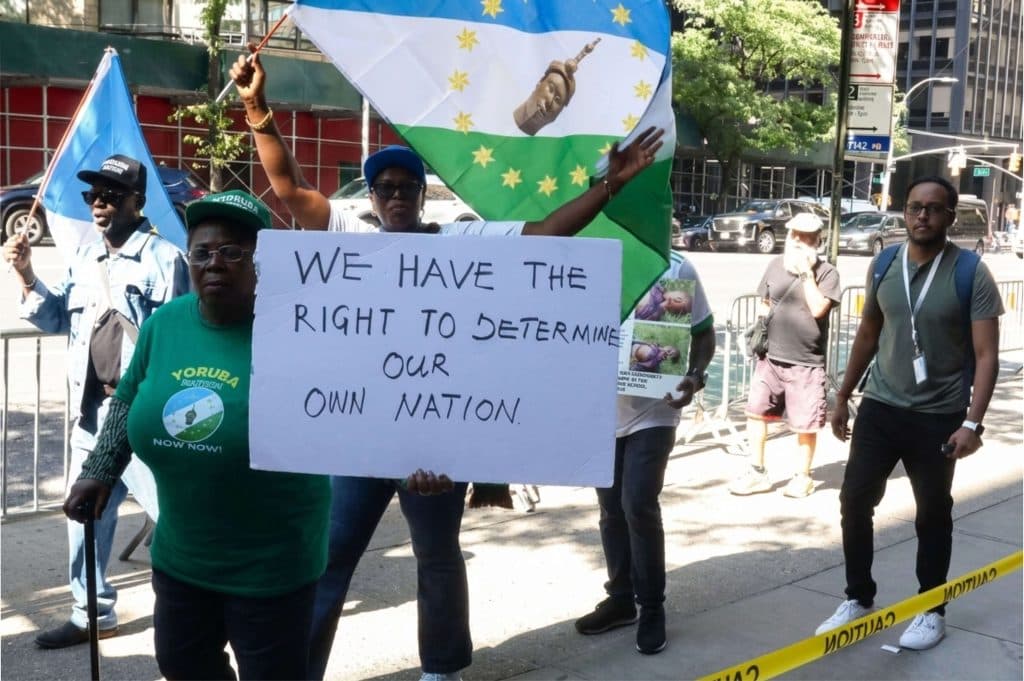
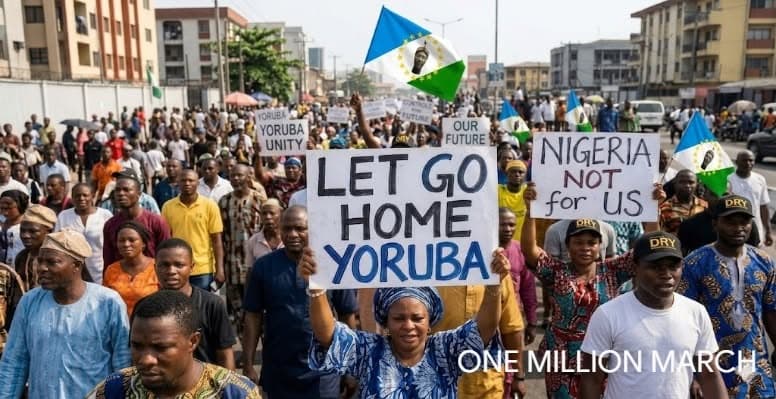
Public visibility of the Yoruba self-determination movement expanded significantly around April 12, 2024, as the Democratic Republic of the Yoruba (D.R.Y.) entered a new phase of structured civic engagement and peaceful mobilisation.
This period marked the emergence of His Excellency Mobolaji Olawale Akinola Omokore as the Interim President and Head of the Provisional Government of the Democratic Republic of the Yoruba (D.R.Y.), providing coordinated leadership toward the aspirations of the Indigenous Yoruba People.
Since then, D.R.Y. has continued to advocate peaceful self-determination, justice, security, cultural preservation, prosperity, and responsible governance for present and future generations of Yoruba people worldwide.
Why is the Yoruba region still part of Nigeria?
The Yoruba region remains within Nigeria because:
The international community continues to recognize Nigeria’s territorial integrity based on existing fundamental constitutional frameworks.
We are yet to fully commence governance even though necessary steps have been taken.
Does international law support self-determination?
Yes, international law recognizes the principle of self-determination, allowing peoples to determine their political status and pursue development. However, this principle is balanced with respect for the territorial integrity of established states.
What approach does the IYP of DRY emphasizes?
The IYP of DRY emphasizes peaceful engagement, lawful processes, dialogue, and adherence to internationally accepted principles in the pursuit of its objectives.
What are the key challenges involved?
Key considerations include:
- The need for international recognition
- Legal and constitutional frameworks
- Diplomatic processes
- Internal coordination and institutional development